


Trends in Trade in Counterfeit and Pirated Goods
Illicit trade in fake goods is a major challenge in an innovation-driven global economy. It has a negative impact on the sales and profits of affected firms, as well as broader adverse effects on the economy as well as public health, safety and security. Organised criminal groups are seen as playing an increasingly important role in these activities, using profits from counterfeiting and piracy operations to fund other illegal activities. Counterfeiters operate swiftly in the globalized economy, misusing free trade zones, taking advantage of many legitimate trade facilitation mechanisms and thriving in economies with weak governance standards.
To provide policy makers with solid empirical evidence for taking action against this threat, the OECD and the EU Intellectual Property Office (EUIPO) joined forces to carry out a series of analytical studies. The results have been published in a set of reports, starting with the 2016 Trade in Counterfeit and Pirated Goods: Mapping the Economic Impact. The report showed that trade in counterfeit and pirated goods amounted to up to 2.5 % of world trade in 2013; when considering only the imports into the EU, they amounted to up to 5 % of imports.
Trade in counterfeit and pirated goods is a very dynamic and constantly changing phenomenon. Continuous measurement efforts are needed to monitor this risk. This report presents updated figures on the scale, scope and magnitude of trade in counterfeit and pirated goods, based on a statistical analysis of a unique database of half a million seizures of counterfeit goods. Structured interviews with trade and customs experts also contributed to the analysis.
The results are alarming. In 2016, counterfeit and pirated goods amounted to as much as 3.3% of world trade, and up to 6.8% of EU imports from third countries. These figure underscore once again the need for coordinated action against IP crime in general and trade in counterfeits in particular.
We are very pleased that our two institutions joined forces once again to update the results published in the 2016 OECD – EUIPO report Trade in Counterfeit and Pirated Goods: Mapping the Economic Impact and to assess the scope and magnitude of damages to world trade caused by counterfeit and pirated goods.
At the OECD, this study was conducted under the Task Force on Countering Illicit Trade (TF-CIT) of the OECD High Level Risk Forum. The Forum focuses on evidence-based research and advanced analytics to assist policy makers in mapping and understanding the market vulnerabilities exploited and created by illicit trade. The study was shared with other policymaking OECD bodies with relevant expertise in the area of trade and innovation.
Related Posts
Large quantity of packaged water bearing fake ISI mark seized in Pune
A city company engaged in manufacturing of packaged drinking water was raided by...
Illegal cigarette smuggler from Erdington jailed after gang evaded £2.4 million of tax
A MAN from Erdington who was part of a multi-million pound cigarettes smuggling...
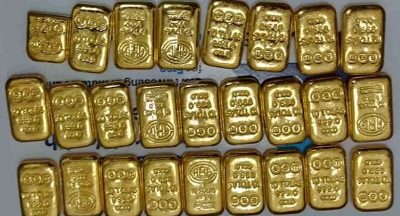
Two Sri Lankan women caught smuggling gold worth over Rs 30 lakh at Pune airport.
Customs officials on Thursday caught two Sri Lankan women, for allegedly...
Tiny Particles could Help Verify Counterfeit Goods
Chemical engineers hope smartphone-readable microparticles could crack down on...