



Reduction in Piracy Can Create More Jobs
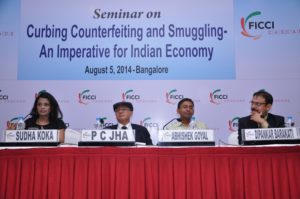
BANGALORE: Taking advantage of lax laws governing piracy and smuggling, many people who deal in counterfeit items manage to continue their business after paying fines, said P C Jha, former chairman of Central Board of Excise and Customs and now a member of the Federation of Indian Chambers of Commerce and Industry. Speaking at a seminar on ‘Curbing Counterfeiting and Smuggling’ organised by FICCI, Jha said a 10 per cent reduction in piracy in the IT sector would lead to the creation of 1 lakh jobs, according to estimates. “The laws provide for a two year-jail term or a maximum of `2 lakh fine. When a person makes crores from piracy, `2 lakh is peanuts. Also cases go on for ten years or so. The laws are not strict enough,” he said.
Lear MoreBill defines smuggling as economic sabotage
The partylist group Abono has filed a bill to fight the smuggling of agricultural products, making the illegal activity a form of economic sabotage. Rosendo So, Abono chair, said House Bill No. 4767, known as the “Direct and Technical Smuggling as Economic Sabotage Act of 2014,” would help local producers and manufacturers compete and eliminate unfair competition. “Imagine the taxes lost because of smuggling and its impact on local farmers who cannot compete with the low prices of smuggled goods,” said So, who is also president of Samahang Industriya ng Agrikultura. So, citing information gathered by Abono, said a total of P65-billion worth of agricultural products like rice, pork and poultry, were smuggled into the country in 2012 and 2013. “Considering the far-reaching effect of smuggling on the Philippine economy and on Filipinos regardless of their socio-economic status, smuggling should be considered a form of economic sabotage,” Abono Representatives Francisco Emmanuel Ortega and Conrado Estrella III said in the bill’s explanatory note.
http://newsinfo.inquirer.net/626665/bill-defines-smuggling-as-economic-sabotage
Lear More
Monopoly, not smuggling, is rice trader’s charges
Suspected rice smuggler David Bangayan, also known as David Tan, will not be charged with smuggling, but with monopoly of supply, it was learned Tuesday. “He could only be charged with monopoly in restraint of trade for using farmers’ cooperatives as dummies to secure importation permits,” sources from the National Bureau of Investigation told the Inquirer. Bangayan, who insisted he was not David Tan, was positively identified by leaders of farmers’ cooperatives, who served as his dummies and who later turned witnesses for the government during the investigation, as “one and the same person.” The sources also said that cases would be filed before the Office of the Ombudsman this week.
http://newsinfo.inquirer.net/626750/monopoly-not-smuggling-is-rice-traders-charges
Lear MoreSeminar on ‘Curbing Counterfeiting and Smuggling – An Imperative for Indian Economy’, Bangalore
FICCI CASCADE organized a Seminar on ‘Curbing Counterfeiting and Smuggling – An Imperative for Indian Economy’ on August 05, 2014 at Bengaluru. The seminar discussed the role of media and consumer organisations in increasing awareness on the subject and enforcement issues in addressing this menace. Besides focusing on the losses to the government and industry, the seminar also highlighted growing link between counterfeit & smuggled activities and organized crime. Shri Dinesh Gundu Rao, Minister for Food, Civil Supplies and Consumers Affairs, Government of Karnataka was the chief guest at the programme.

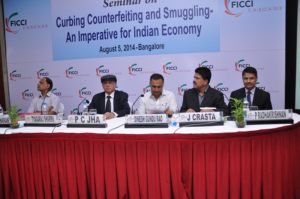
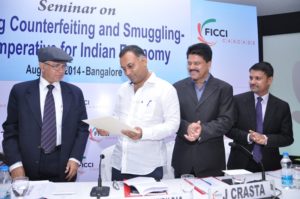
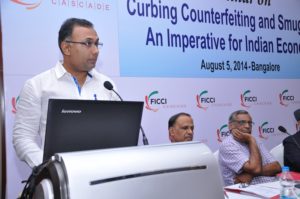
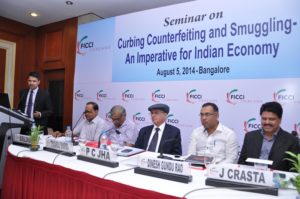
Seminar Report
Spot the fake apps
Dangerous, fake smartphone apps lurk in app stores
Hackers are making fake apps to scam you, steal your personal information and rip you off. The fake apps appear in the app stores and are disguised to appear like the real thing. The danger is bigger than just wasting a couple bucks on an app that doesn’t work. They could hack your Facebook, for example, or Twitter,” said Orlando tech expert Carlos Carbonell of Echo Interaction Group. “They can also access banking info.”
http://www.news4jax.com/news/spot-the-fake-apps/27321370
Lear MoreBetter steps required to curb smuggling: Rajnath Singh
Government on Tuesday said current measures are not enough and better steps are required at international borders to prevent smuggling of narcotics. Home Minister Rajnath Singh informed the Lok Sabha that while smuggling of narcotics has been taking place for a long time, government keeps taking steps to check the trend. The steps include fencing of border and flood lighting. He said the present steps are not enough and still better measures are required to curb smuggling.
Lear More
De Lima appeals oil smuggling case ruling
The government would seek reconsideration of the Court of Appeals’ decision dismissing the P6-billion smuggling charges filed against a Davao City-based oil firm, its president and customs broker, Justice Secretary Leila de Lima said on Sunday. “We will definitely appeal that decision. I will ask the Office of the Solicitor General to file a motion for reconsideration,” De Lima said in a text message.
Last Friday, the Court of Appeals Former Special 10th Division reversed the Justice Secretary’s decision to indict Phoenix Petroleum Philippines Inc., its president and chief executive officer Dennis Uy and customs broker Jorlan Cabanes, for violations of the Republic Act No. 1937, or the Tariff and Customs Code of the Philippines (TCCP). The appeals court ruled that Uy and Cabanes were deprived of due process when De Lima set aside the earlier resolution issued by Justice Undersecretary Francisco Baraan III that recommended the dismissal of the case against the respondents.
http://newsinfo.inquirer.net/626048/de-lima-appeals-oil-smuggling-case-ruling
Lear MoreFrom Iran and Afghanistan: Smuggled POL products continue to flow into Pakistan
ISLAMABAD: The Federal Board of Revenue (FBR) has conceded that despite its efforts petroleum, oil and lubricants (POL) products are continuously being smuggled into Pakistan through Iran and Afghanistan borders. In a statement submitted in the upper house of the parliament in response to a question, the FBR claimed that it was very sensitive to smuggling of the Iranian POL products.
“[This smuggling takes place] through non-specific routes across the borders and uninhabited beaches on the sea, where only Coast Guards and Frontier Corps (FC) have their presence with matching human resource and firepower to counter the smugglers in these areas of Balochistan,” it said. According to the FBR, the average monthly quantity and volume of POL products smuggled from Iran and duly confiscated by Customs authorities in the current calendar year is 131,238 litres.
Lear More
Tobacco: Confronting Challenges of Smuggling and Illicit Trade
The world has long been awakened to the harsh reality of terrorism and criminal money laundering. In Nigeria, the Boko Haram insurgency has brought home the reality of terrorism with even more poignancy. Terrorism typically needs to be funded and globally, it has since been established that illicit trade in tobacco is one of the major avenues by which terrorism is funded. Since the dawn of terrorism, procuring finances sufficient to sustain terror operations has been a priority for the terrorists. The illicit sale of cigarettes and other commodities by terrorist groups and their supporters has become a crucial part of their funding activities.
However, one of the measures which anti-tobacco activists have been advocating to reduce tobacco consumption because of its widely-acknowledged harmful effects, is the raising of taxes payable by tobacco manufacturing companies. The argument is that once the tobacco producer is heavily taxed, it would be forced to raise the price of its cigarettes, which will now be beyond the financial capability of the ordinary consumers who would then be forced to either reduce their smoking expenditure or quit smoking totally.
Lear MoreRoundtable on Smuggled and Counterfeit Food Products – July 2014, New Delhi
24/7/2014 | New Delhi
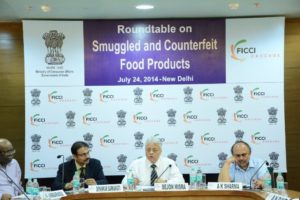
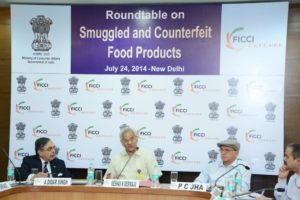
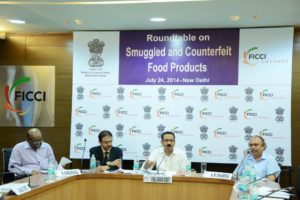
FICCI CASCADE (Committee Against Smuggling and Counterfeiting Activities Destroying the Economy) in association with the Department of Consumer Affairs, Ministry of Consumer Affairs, GoI organized a Roundtable on Smuggled and Counterfeit Food Products on 24 July, 2014 at New Delhi to enhance knowledge support and learning on the subject and formulate prevention and management strategies.
The smuggled and counterfeit food products business is ‘doing well’ in our country affecting the health of our consumers. In the FMCG industry, packaged food sector is vulnerable to counterfeiting and smuggling. Counterfeiting in this area is particularly dangerous because consumption of non-standard or low quality edible food items may cause serious health ailments or be life-threatening.
Data shows that counterfeit and smuggled food products are being produced and consumed in virtually all economies, with Asia emerging as the single largest producing region. In recent years, there has been an alarming expansion of the types of products being infringed, from luxury items to items that have an impact on personal health and safety, like food and drink. The range of counterfeit and smuggled food products vary from conserved vegetables, milk powder, butter, ghee, baby food, instant coffee, alcohol, drinks, candy and sweets, hybrid corn seeds, etc. Thus the magnitude and effects of smuggling and counterfeiting on food items are of such significance that they call for strong and sustained action from the governments, business, and consumers.
A recent FICCI CASCADE study stated that in the packaged food sector, the grey market is about 23.4% which results in direct tax loss of Rs. 552 crore; Indirect tax loss of Rs. 5,108 Crore, and thus total loss to the exchequer amounts to Rs. 5,660 Cr. The sales loss to the industry was reported to be about Rs. 20,378 Crore.
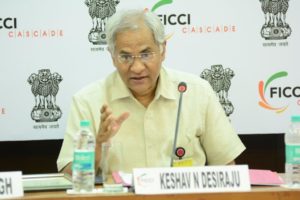
Mr. Keshav N Desiraju, Secretary, Dept. of Consumer Affairs was the chief guest at the roundtable, he urged the stakeholders to come together to fight the menace of smuggling and counterfeiting. Mr. Desiraju stated that the consumers are allowing the smuggled and counterfeit market to flourish hence sustained consumer education and awareness is imperative. Mr. Desiraju also emphasized on a national movement on anti-smuggling of food products in the country.
Dr. A. Didar Singh, Secretary General FICCI mentioned that 21st century is seeing the emergence of consumers and FICCI is acting as a conduit between businesses and consumers.
Mr. P. C. Jha, Advisor FICCI CASCADE in his address stated that the costs of counterfeiting and smuggling are not only real, but are huge. With the increase in global trade and technological revolution, there has been an increase in commission of crime related to smuggling and counterfeiting. These types of crime have increased considerably, and as a result, the government, businesses, society, and consumers have to suffer heavy financial losses. Protection against such crimes is an important element in encouraging research and innovation, international trade and investment, and sound economic growth and development.
The roundtable was attended by decision makers from Government, Quasi Government bodies and regulators such as Bureau of Indian Standards, National Test House, Legal Metrology, Consumer Protection Unit, FSSAI; leading industries such as ITC, Marico, Coca Cola, Nestle, HUL etc. and prominent Consumer Organizations such as VOICE, CUTS, CERC, Consumer Online Foundation etc who deliberated on specific issues on counterfeiting and smuggling activities in the packaged food sector. The roundtable focused on four product categories, namely, Milk & Milk Products, Bakery products + cereals (like ‘atta’), Aerated water + Mineral water, and Edible Oil – all food products which have a direct impact on the health and general welfare of consumers.
The roundtable will chart out concrete recommendations and strategies for prevention, mitigation, and management of the problem and will present a paper to the Ministry in a month’s time. The recommendations would include Focus on rural market- food product of mass consumption; Reinventing the “Jago Grahak Jago” publicity campaign especially with reference to food products; Comparative testing; Class action suits; Structured consumer awareness syllabi for young India; Market surveillance and Industry support and partnership initiatives.
Lear More