




Police dismantle tobacco smuggling gang, seize 1.2m cigarettes.
The Portuguese police said they have arrested the leader of a tobacco smuggling gang and seized 1.2 million cigarettes in Porto and Aveiro, both in the north of Portugal.
The leader of the gang has been charged with criminal association and qualified tobacco smuggling.
On Thursday the police seized 130,000 cigarettes and 226 kg of tobacco plus two vehicles. Most of the tobacco has hidden in false compartments in the vehicles that had been specially made to hide the contraband.
The police also said that a total of 10 individuals and two companies had been charged in connection with the smuggling.
Lear MoreTake these steps to stay safe from counterfeit software and fraudulent subscriptions
Software piracy and fraudulent subscriptions are serious, industry-wide problems affecting consumers and organizations around the world.
In 2016, 39 percent of all software installed on computers was not properly licensed, according to asurvey conducted by BSA and The Software Alliance. And each year, tens of thousands of people report to Microsoft that they bought software that they later learned was counterfeit.
What can appear to be a too-good-to-be-true deal for a reputable software program, can in fact be a counterfeit copy or a fraudulent subscription. In many cases, such illegitimate software downloads may also be riddled with malware – including computer viruses, Trojan horses, spyware, or even botware, designed to damage your computer, destroy your data, compromise your security, or steal your identity. And in the world of cloud computing, where many applications are often delivered as a subscription service, consumers could be unwittingly sending payments to cybercriminals, unaware that cybercriminals selling fraudulent subscriptions will not provide needed administrative support.
Curbing the proliferation of software piracy
Cybercriminals are always looking for ways to trick consumers– and the outcome can be costly. According to report released by the Ponemon Institute in 2017, the average cost of cybercrime globally climbed to $11.7M per organization, a staggering 62 percent increase over the last five years. And a recent Juniper Research report, Cybercrime & the Internet of Threats 2017, states that “the estimated cost to the global economy as a result of cybercrime is projected to be $8 trillion by 2022.”
How do cybercriminals deceive consumers? There are many ways. One common technique is to set up a fake website that falsely claims the software subscriptions or copies offered for sale on the site are legitimate. Sophisticated cybercriminals go to great lengths to make their websites look authentic to trick consumers into buying fraudulent subscriptions or counterfeit software.
For decades, through partnerships with industry, governments, and other agencies, Microsoft has been working to fight software counterfeiting and to protect consumers from the dangers posed by this and other types of cybercrime. Today, Microsoft’s Digital Crimes Unit (DCU), a unique group of cybercrime-fighting investigators, analysts, and lawyers, works globally to detect and prevent fraud targeting our customers. Our priority is to protect our customers and help create a secure experience for everyone. One of the key ways we do this is to work with law enforcement and other organizations to bring the perpetrators of cybercrime to justice.
Lear MoreCounterfeit Products Trafficking.
Counterfeiting of identification documents, CDs, DVDs, software, medicines, weapons, food products, clothing and cigarettes has grown significantly in recent years, largely due to advances in technology and the ease of movement of these goods around the world. The involvement of organized criminal groups in the production and distribution of counterfeit goods is well documented and they operate across national borders in activities that include the manufacture, export, import and distribution of illicit goods. International, regional and national authorities have uncovered intricate links between this crime and other serious offences, such as the ones dealt with in other sections of this Module.
In June 2010, Italian police arrested 17 Chinese nationals and seven Italian nationals in an investigation into various criminal activities, including money laundering, tax evasion, human trafficking, and the distribution of counterfeit goods. The counterfeit goods were primarily designer clothes produced by Chinese criminal groups in Tuscany. That investigation led to the seizure of 780,000 counterfeit items. (UNODC, 2013).
The making of false legal documents or altering of existing documents is forgery. Forgery is a generic term and it technically encompasses counterfeiting. Nonetheless, these terms are often used interchangeably to describe faked or false documents or products of any kind, and their usage varies internationally. Counterfeiting originally referred specifically to the falsifying of currency, but its usage has expanded to all types of forgeries, which involve manufacturing or trading of a document or product without the permission of the lawful owner of the patent, trademark, copyright, or license.
Corruption and bribery are inherently linked to the illicit trafficking of counterfeit goods, especially when these are shipped internationally. Trafficking in counterfeit goods also offers criminals a complementary source of income and a tool to launder proceeds derived from various crimes. In a similar fashion, proceeds from other crimes have been used by organized criminal groups to finance their counterfeiting businesses. (UNICRI / ICC BASCAP, 2013)
Lear More
Quantum cascade lasers ‘can detect falsified drugs’.
Researchers at the Fraunhofer Institute in Germany have developed a miniaturised quantum cascade laser (QCL) device that could provide a new, no-contact way of rapidly distinguishing falsified from genuine medicines.
The matchbox-sized unit has already showed its security potential in the rapid detection of explosive or toxic substances – at a distance of several metres – and Fraunhofer is in the process of seeking out industry partners to develop that commercial application. At the same time, it is assessing QCL for pharmaceutical applications, including not only detection of counterfeits but also monitoring the quality of medicines during manufacturing.
The semiconductor-based infrared laser technology comes from a tie-up between Fraunhofer’s Dresden-based Institute for Photonic Microsystems IPMS – which has been working on the detector component of the device – and its Institute for Applied Solid State Physics which developed the tunable laser chips.
Lear MoreRevealed: Big challenge faced by Indian industry
Chennai: “The illicit market for fake and smuggled products is one of the biggest challenges faced by Indian industry,” ADGP, Crime Branch CID, Tamilnadu, K Jayanth Murali stated at a seminar on Combating Counterfeiting and Smuggling – An Imperative to Accelerate Economic Development organised by FICCI CASCADE (Committee Against Smuggling and Counterfeiting Activities Destroying the Economy) on Tuesday.
The seminar discussed the importance of increased awareness on the hazards of counterfeiting and smuggling, and the need for effective enforcement to enhance India’s economic development.
Jayanth Murali said, “The illicit market for fake and smuggled products is one of the biggest challenges faced by Indian industry. In India, the issue of fake currency is also a serious problem as it is lucrative, offering higher returns. India has porous borders with countries like Nepal and Bangladesh which gives smugglers good opportunity to smuggle products into India. China is also posing a serious threat to India on this issue.”
https://www.newstodaynet.com/index.php/2018/03/28/revealed-big-challenge-faced-by-indian-industry/
Lear MoreFICCI raises awareness on smuggled and counterfeit goods by organizing seminars nationally
Delhi: FICCI CASCADE (Committee Against Smuggling and Counterfeiting Activities Destroying the Economy) an industry body working on addressing the issue smuggled and counterfeit goods in the country is organzing large-scale awareness programmes nationally involving the government and other agencies to fight the menace of illicit trade. As part of the awareness campaign, it has lined up a slew of activities, including seminars, youth and consumer sensitization programs, capacity building of enforcement officials in different states including Kerala, Tamil Nadu, Delhi, Karnataka, Jammu & Kashmir etc. Today, FICCI CASCADE organized a seminar on ‘Combating Counterfeiting and Smuggling – An Imperative to Accelerate Economic Development’ with representation from enforcement agencies and policy makers of Tamil Nadu Government.
FICCI also highlighted incidents of increasing number of seizures especially for products lie Gold, Cigarettes, Machinery Parts, Fabric/Silk Yarn and Electronic Items that has witnessed the highest number of DRI seizures in the past few years. The number of incidents of smuggling of cigarettes & tobacco products in India has increased by 136%* from 1312 cases in 2014-15 to 3108 cases in 2016-17.
Lear MoreFICCI meet highlights menace of counterfeit products
The menace posed by counterfeit products such as auto parts and packaged foods was highlighted at a seminar on combating duplicates of popular brands held here today.
Speakers at the event discussed various aspects of the counterfeit problem, including the government incurring losses running into thousands of crores, apart from health hazards.
The meet – ‘Combating Counterfeiting and Smuggling An Imperative to Accelerate Economic Development’ was organised by Federation of Indian Chamber of Commerce and Industry’s (FICCI) Committee Against Smuggling and Counterfeiting Activities Destroying the Economy (CASCADE).
Advisor, FICCI, CASCADE, P C Jha said the estimated loss to the industry in sectors including alcoholic beverages, auto components, computer hardware, FMCG packaged foods and FMCG personal goods, mobile phones and tobacco had increased by Rs 32,412 crore between 2011-’12 to 2013-’14.
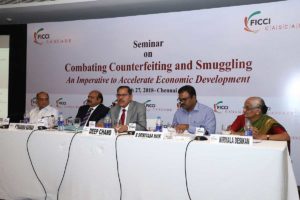
Lear MoreSeminar on Combating Counterfeiting and Smuggling- An Imperative to Accelerate Economic Development, Chennai
27/3/2018 | Hotel Raintree, Anna Salai, Chennai
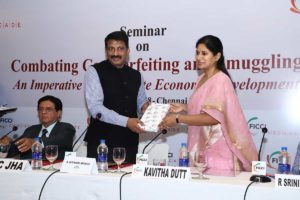
FICCI CASCADE (Committee Against Smuggling and Counterfeiting Activities Destroying the Economy) organized a seminar on ‘Combating Counterfeiting and Smuggling – An Imperative to Accelerate Economic Development’ on March 27th, 2018 in Chennai. The object was to discuss the importance of increased awareness among stakeholders on the hazards of illicit trade, and the need for effective enforcement to enhance India’s economic development. Dr. K Jayanth Murali, ADGP Crime Branch CID, Tamil Nadu was of the view that illicit market for fake and smuggled products was one of the biggest challenges faced by Indian industry. In India, the issue of fake currency was also a serious problem as it was lucrative, and offered high returns. Besides, India had porous borders with countries like Nepal and Bangladesh which provided smugglers the opportunity to smuggle products into India. Mr. R. Srinivasa Naik, Commissioner of Customs, Chennai Customs Zone, in his address stated “In India, there is a strong demand for cheaper branded products from toys to airplane parts. Apart from significant economic loss in terms of revenue, the illicit and smuggling activities affects consumer health and safety, promotes money laundering causing huge loss of reputation to brand owners and our country as a whole.”
Ms. Kavitha Dutt, Co-Chairman, FICCI Tamil Nadu State Council, while welcoming the dignitaries, highlighted the objectives of the seminar which included generating awareness, interaction with law enforcement agencies and sharing of best practices. She said that the market for smuggled, counterfeits and contraband products was spreading its tentacles across the industry and this crime had increased manifold. She emphasized that it was imperative to reassure legitimate business owners and consumers that the government was serious about protecting their rights.
Mr. P C Jha, Advisor, FICCI CASCADE and Former Chairman, CBEC outlined the impact of counterfeiting & smuggling. “During the last twenty years, volume of counterfeiting activity has increased 100 times and the size of trade in counterfeited goods is 10% of the legal international trade (around 2% of the world’s overall economic output). The problem of illicit trade is much more serious than it is commonly perceived. It has a huge adverse impact on the security and economy of the country, revenue of the government, health of the people and on the environment. There is also no doubt that the illegal money generated through illicit trade in smuggled, counterfeited and pirated goods is a major source to finance such dangerous activities as terrorism, insurgency and other organized crimes”, said Mr. Jha.
Advisor, FICCI CASCADE and former Special Commissioner of Delhi Police, Mr. Deep Chand said that industry should cooperate with the police to ensure conviction and not stop at just filing complaints. “It is time that we, as a nation and as a part of the global economy, call for stern and resolute counterstrike measure against such ill-intentioned activities; starting with greater vigil at the borders to bilateral and multilateral engagements between nations, strengthening the enforcement agencies and working towards the removal of ambiguities in the law related to illicit products”, observes Mr. Chand.
On the factors behind consumers opting for counterfeit products, consumer right activist Nirmala Desikan said those who bought fake goods did so as they were cheaper. On drug counterfeiting, she said at one point of time there were about 35 counterfeits of the popular “Nimesulide” (a pain reliever) brand. She said consumers should be alert as such illicit products could be a cause of morbidity and mortality.
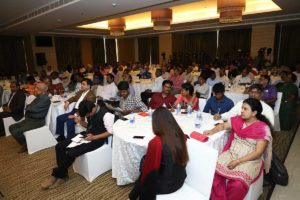
The seminar also marked the enthusiastic and encouraging support of Mr. P. Thamarai Kannan, Inspector General of Police, Crime (CID) and Mr. Jagannath Ramaswamy, Chief Mentor, Crystal. Mr. Ramaswamy emphasized on the role of organizations like FICCI and appealed to the industry to help protect the “Consumer”. Mr. Ruban Hobday, Head, FICCI Tamil Nadu State Council gave the Vote of Thanks. Over 150 people attended the seminar, which saw vigorous interaction with most delegates demonstrating an active interest in the issue.

CBP seizes more than $1 million of counterfeit speakers at International Falls port
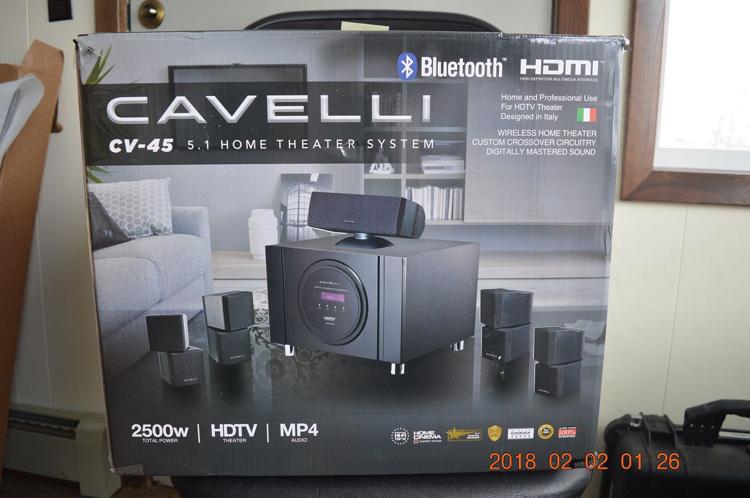
More than $1 million of counterfeit home theater speaker systems in a rail car headed for Ranier were seized in February by U.S. Customs and Border Protection officers.
CBP Office of Field Operations officers working at the International Falls Port of Entry targeted a rail container destined to arrive in Ranier. In February, CBP officers inspected the rail container and discovered merchandise in violation of intellectual property rights regulations.
The merchandise consisted of 480 home theater speaker systems. Examination of the speaker systems revealed counterfeit markings. The counterfeit merchandise has an aggregate manufacturer’s suggested retail price of $1.38 million.
“Counterfeiting adversely affects lawful rights holders of their original ideas and the ability to make a profit from them,” Anthony Jackson, International Falls port director, said in a news release. “Counterfeiting also harms consumers because manufacturers of forged products have little motivation to use safe, high-quality materials in their products.”
Lear More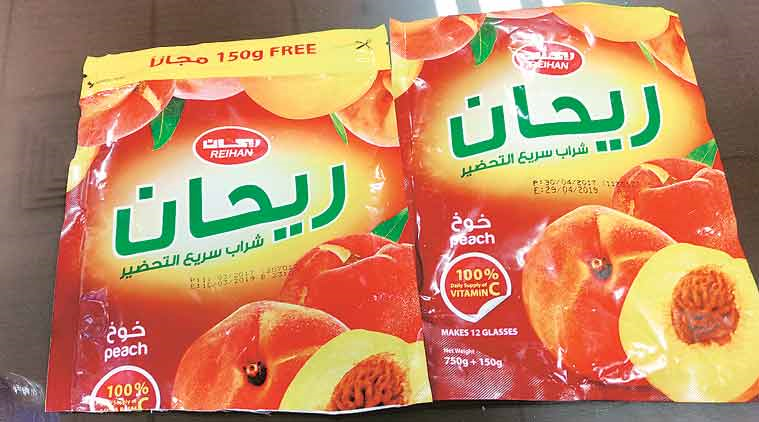
Four busts at IGI airport: Gold smuggling, now in fruit drink mixture
For the last two months, 30-year-old Sahansha had been desperately looking for an opportunity to return to his village in Rajasthan from Riyadh. He had landed in Abu Dhabi with high hopes, but had soon realised that he had been cheated on the pretext of a job.
Then he got an offer: He would get Rs 8,000 and a ticket to India, but would have to carry along a packet with a powdered fruit drink mixture. In reality, though, the packet contained 695 grams of gold — in the form of granules. Clueless, he landed in Delhi — only to be apprehended by Customs officials at the Indira Gandhi International Airport on Tuesday.
The seizure is one of four cases at IGI airport in the past month of gold granules being found inside such packets. “Gold granules mixed with fruit drink powder are hard to detect. Smugglers mix them in a way that it’s impossible to spot it with the naked eye. But customs officials segregate the two powders using sieves of different sizes, and detect it in an X-ray scanner,” a senior official said.
Lear More