



Woman held with 11kg gold, Rs 1.9 crore foreign notes.
HYDERABAD: Directorate of Revenue Intelligence (DRI) sleuths caught a 50-year-old woman at Rajiv Gandhi International Airport on Tuesday and seized 11.1 kg gold worth Rs 3.63 crore and Rs 1.9 crore in foreign currency.
What caught the DRI sleuths off guard was the way the Hyderabad woman had managed to hoodwink the customs authorities when she arrived from Dubai in the early hours. The gold was arranged on the smuggler’s self in such a manner that even hand-held metal detectors could not detect it. After recovering the gold and cash, a DRI team conducted a search in a five-star hotel in Gachibowli where the accused has been staying for the last three months. The DRI team is trying to find out why the smuggler has been staying in the hotel though she hails from the city. “The gold and the foreign currency were concealed in seven specially made cloth pouches and socks. The burqa-clad smuggler pinned the pouches and socks to multiple layers of leggings she had worn,” a DRI official said. Acting on specific leads, the DRI team intercepted the woman, who opted for the green channel indicating she was not carrying any items which invite customs duty and successfully passed through customs check. However, the DRI team stopped her before she could exit the terminal and frisked her. During the search, they recovered gold biscuits weighing 11.1 kg and Rs 4.25 lakh worth Singapore dollars and UAE dirhams.
https://timesofindia.indiatimes.com/city/hyderabad/woman-held-with-11kg-gold-rs-1-9-cr-foreign-notes/articleshow/69549908.cms
Nepal police busts fake currency racket, 3 Pak nationals arrested.
Bringing to light how Pakistani nationals use Nepal as a transit hub for smuggling counterfeit Indian currency, the Nepal Police recently busted a Fake Indian Currency Notes (FICN) nexus, arresting three Pakistanis and fake currency kingpin Yunus Miya Ansari from Tribhuvan International Airport here. Along with the Pakistani nationals, two people from Nepal were also arrested. They had FICN amounting to over seven crores sixty-seven lakhs in their possession when they were caught at the airport. “We have arrested Yunus Miya Ansari along with three Pakistanis and 2 Nepalese nationals from the Tribhuwan International Airport with counterfeit Indian Bank Notes. They came to Nepal from Qatar with the fake Indian currencies but their passport shows that their travel starts from Pakistan,” Bishwo Raj Pokharel, the Spokesman for the Nepal Police, told ANI on Friday. Friday’s arrest has become a subject of concern for some former intelligence and security personnel, as a few anomalies have been observed in the mode of trafficking.
Lear MoreMan Pleads Guilty to Trafficking Fake iPhones in Scheme That Cost Apple Nearly £711,000.
A Chinese national and former engineering student in the US state of Oregon pleaded guilty on Wednesday to one count of trafficking in counterfeit goods in a scheme that defrauded Apple out of roughly 1,500 iPhones. According to court records, US Customs and Border Protection opened an investigation in 2017 into a number of shipments of counterfeit iPhones that led them to Quan Jiang. Investigators said Jiang told them during an interview in December of that year that he regularly received packages from China that contained 20 to 30 inoperable iPhones, which he would then trade in for legitimate iPhones through Apple’s warranty programme by claiming they would not power on. Jiang told investigators that after trading in the fake iPhones for legitimate Apple products, either in person or online, he would ship them back to China where they were sold for hundreds of dollars. In exchange, Jiang would receive a cut of the money. Those funds were reportedly delivered to Jiang’s mother, who lives in China and would deposit the money in his account. Though Jiang used various aliases as well as the names of friends and family to carry out the scheme, Apple’s records showed that Jiang appeared to be linked to 3,069 warranty claims either with his name, mailing address, email address, or IP address, according to court documents.
Lear More
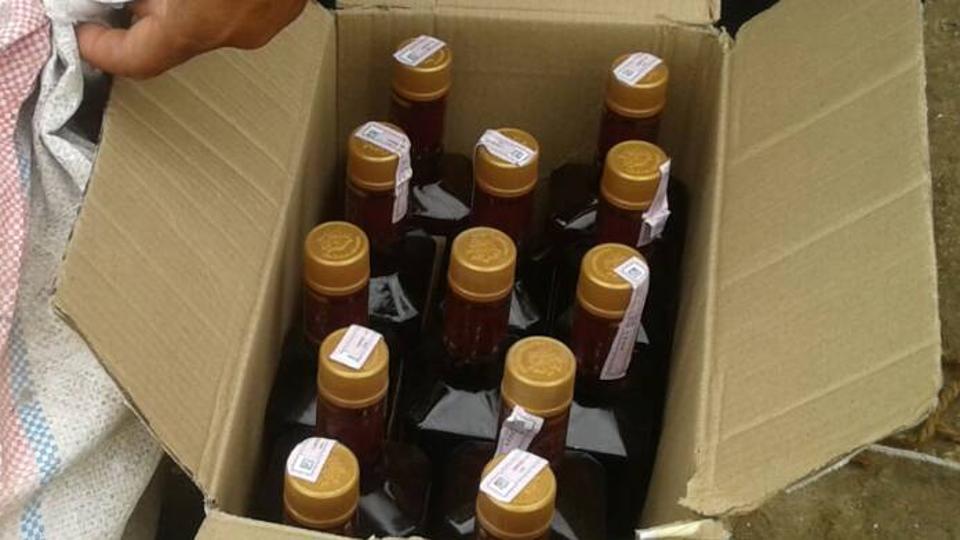
Sub-inspectors suspended for smuggling seized liquor.
Two sub-inspectors were suspended on Thursday for their alleged involvement in liquor smuggling in Greater Noida. They were identified as Komal Kuntal and Vikas (known by his first name only), both deployed at Kasna police station. Vaibhav Krishna, SSP, Gautam Budh Nagar, said the police received information about the presence of illegal liquor in a house in Sector Chi 4 in Kasna. “A team immediately rushed to the spot and arrested one Sanjay Bhati with a consignment of illegal liquor. His accomplice, one Yogi, managed to flee,” he said. During interrogation, Bhati revealed that the liquor had actually been given to him by the two sub-inspectors, Kuntal and Vikas. Krishna said further investigation confirmed his statement. He said that on January 19, 2019, a truck carrying illegal liquor rammed an auto at the ATS roundabout, killing one person. The police seized the truck and found a consignment of illegal liquor inside. They brought the truck to Kasna police station and registered an FIR against its driver, who was at large. Krishna said Kuntal was investigating the matter. “We have suspended the two police officials with immediate effect,” he said.
Lear More
Chinese man guilty of sending 1,500 fake iPhones to Apple in warranty fraud.
SALEM, Ore. — Over the span of two years, a Chinese national in Oregon sent devices that looked like iPhones to Apple, saying they wouldn’t turn on and should be replaced under warranty. He didn’t just submit a couple of the devices — he delivered in person or shipped to Apple around 3,000 of them. Apple responded by sending almost 1,500 replacement iPhones, each with an approximate resale value of $600. But the devices that Quan Jiang sent Apple were fake. Jiang, 30, a former engineering student at a community college in Albany, Oregon, pleaded guilty in federal court Wednesday to trafficking in counterfeit goods, the U.S. Attorney’s office in Portland announced. The presence of fake iPhones and other high-tech gadgets has become an issue in global resale markets, with some counterfeit versions operating so well it’s hard for users to tell the difference between them and the genuine products. But in the Oregon case, the makers of the thousands of fake phones apparently didn’t even have to bother with having working operating systems.
Lear Moremen jailed for smuggling chewing tobacco into Singapore using Malaysian-registered vehicles.
SINGAPORE: Three men have been jailed for their roles in smuggling more than 25,000 sachets of chewing tobacco from Malaysia into Singapore, the Health Sciences Authority (HSA) said in a press release on Wednesday (May 22). Malaysian national Saravana Kumar Lechumanan, 30, was sentenced to seven months’ imprisonment after recruiting couriers to bring the tobacco into Singapore. It is the stiffest punishment to date for importing chewing tobacco, HSA said. Two couriers, both Malaysian nationals, were also handed jail terms. Darmindran Magentheran, 23, was sentenced to six weeks’imprisonment while Kalidas Balakrishnan, 33, was given four weeks’ imprisonment. A total of 25,659 sachets of Hans Chhap khaini tobacco were uncovered on five occasions between June and September 2018 by officers from the Immigration and Checkpoints Authority.
Lear MoreLucknow: Two smuggling booze to Bihar held.
LUCKNOW: Two members of an interstate liquor smuggling gang was arrested from Para area of the city on Monday along with 172 bottles, which are together said to be worth Rs 6.5 lakh. Special Task Force officers have identified the two as Krishna and Phool Singh, both natives of Haryana. They were siphoning off the consignment to Bihar in a concealed space created in the chassis of a truck. “The truck was intercepted in Para and during inspection, the cavity was found. It contained 172 bottles of liquor,” said Abhishek Singh, SSP (STF), and added that the gang was taking the consignment from Haryana to Bihar, where sale and consumption of alcohol is prohibited.
Lear MoreEight men are arrested after terror probe uncovered ‘crime syndicate accused of smuggling 475,000 packets of cigarettes into Australia’.
Eight men have been arrested after a anti-terrorism detectives uncovered an alleged organised crime syndicate accused of smuggling 475,000 packets of illegal cigarettes into Australia. The arrests came after a series of raids in Sydney’s southwest on Tuesday morning. The men first came to the attention of detectives who were investigating possible terrorism funding in New South Wales. A 38-year-old and a 39-year-old were arrested at a Sydney Olympic Park cafe after 8am on Tuesday and taken to local police stations. Later, 19 search warrants were executed in Sydney’s southwest at homes, businesses and storage units – leading to a further six arrests of men between the ages of 27 and 42. The eight accused men are expected to be charged with various offences, NSW police said in a statement.
Lear MoreOver 300 smuggled endangered species items seized in NE China.
SHENYANG, May 19 (Xinhua) — More than 300 items of endangered species including ivory and red coral have been seized in Shenyang, capital of northeastern China’s Liaoning Province, local authorities said. The municipal government and customs said the city has stepped up efforts to crack down on the smuggling of ivory and other items related to endangered species this year. So far, 104 ivory items, 208 pieces of red coral, and giant clam and hawksbill products have been seized. The raw materials are typically made into craftwork, jewelry, stationery and tableware. One suspect has been detained because of smuggling, customs police said. Postal departments, airports, customs and wild animal protection organizations in Shenyang have collaborated in a special campaign against smuggling of endangered species products, introducing advanced detection facilities and strengthening inspections on inbound and outbound postal parcels and travelers’ luggage.
http://www.xinhuanet.com/english/2019-05/19/c_138070724.htm
Lear MoreShopkeeper slapped with £60k fine after illegal cigarettes found behind fake wall.
A shopkeeper who was caught hiding a huge stash of illegal cigarettes behind a fake wall has been slapped with an eye-watering £60,000 court bill. The huge haul – of 718 packs of cigarettes and 107 of tobacco – was discovered by sniffer dogs during the raid at Istanbul Mini-Market in High Street, Brierley Hill. Part of the illegal hoard was also found in Ali Ibrahim Hamad’s car in March 2017. All of the products failed to comply with UK regulations requiring health warnings to be displayed and five brands were found to be counterfeit. The duty evaded was thought to be around £4,400, according to a spokesman for Dudley Council. Hamad, aged 45 and from West Bromwich, was given a 12-month prison sentence, suspended for 18 months, after pleading guilty to seven offences at Wolver hampton Crown Court. He was found to have assets of £58,923, which is below the estimated £65,600 value of the benefit of the crime, and was therefore ordered to pay the entire amount under the Proceeds of Crime Act.
https://www.birminghammail.co.uk/black-country/shopkeeper-slapped-60k-fine-after-16274387
Lear More