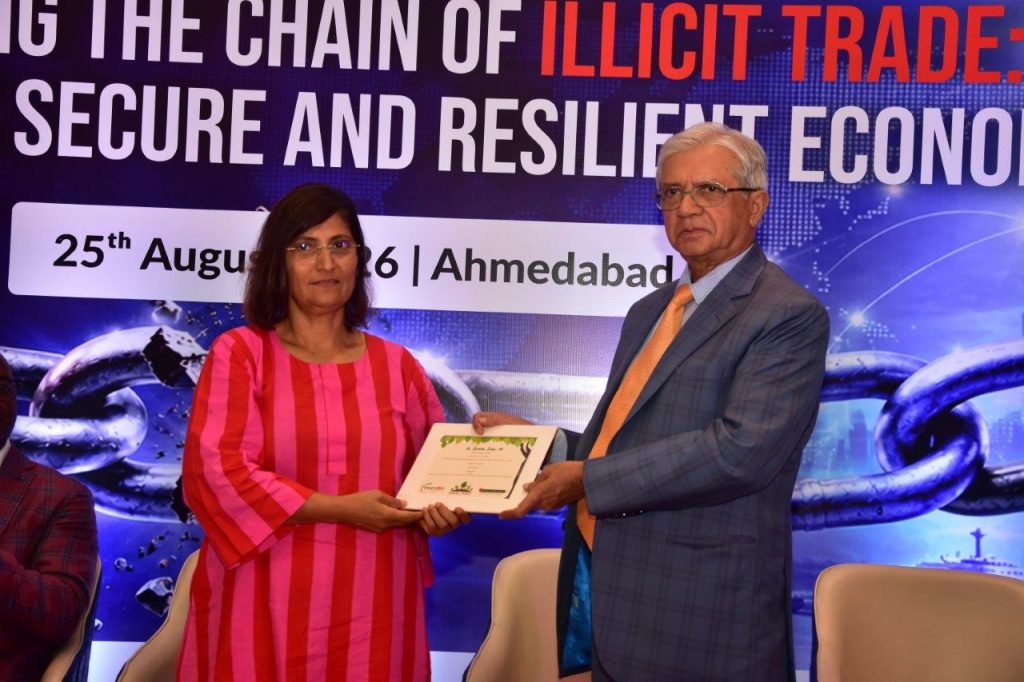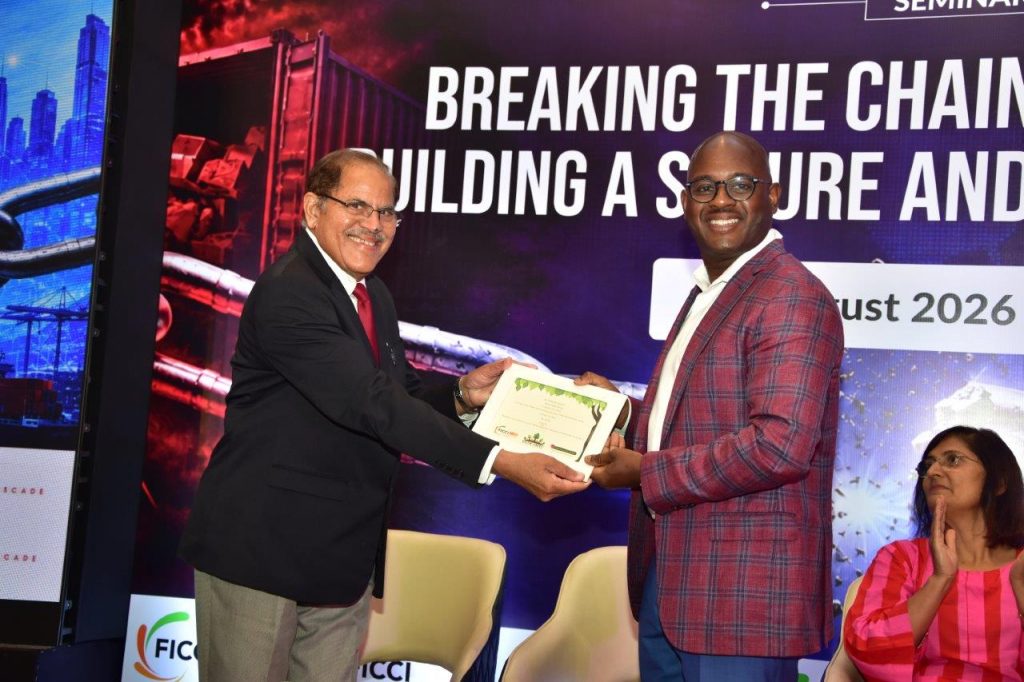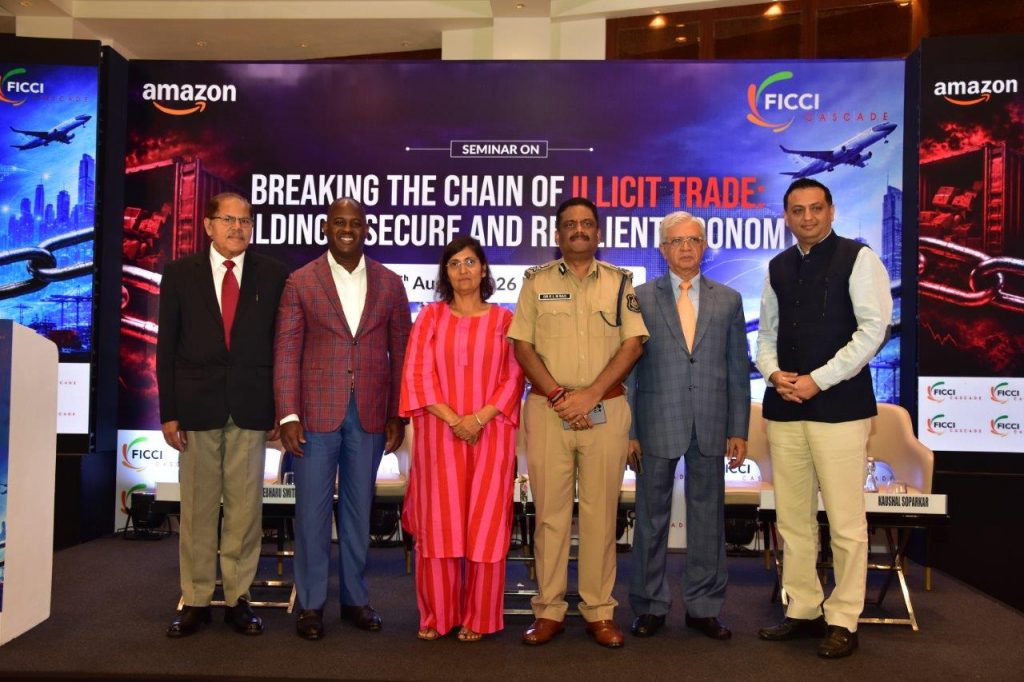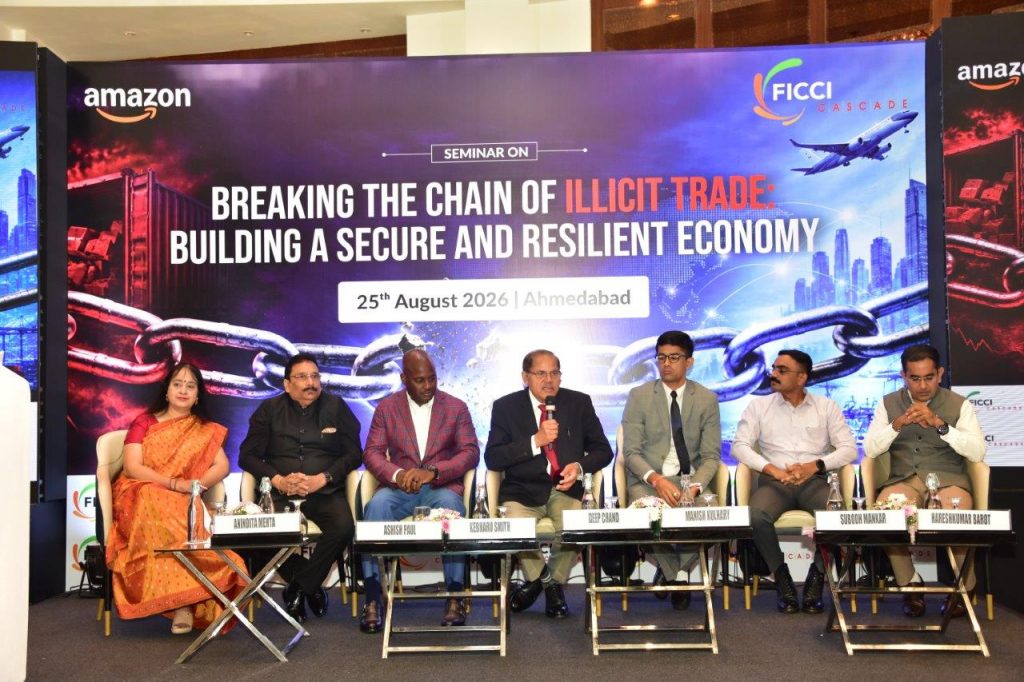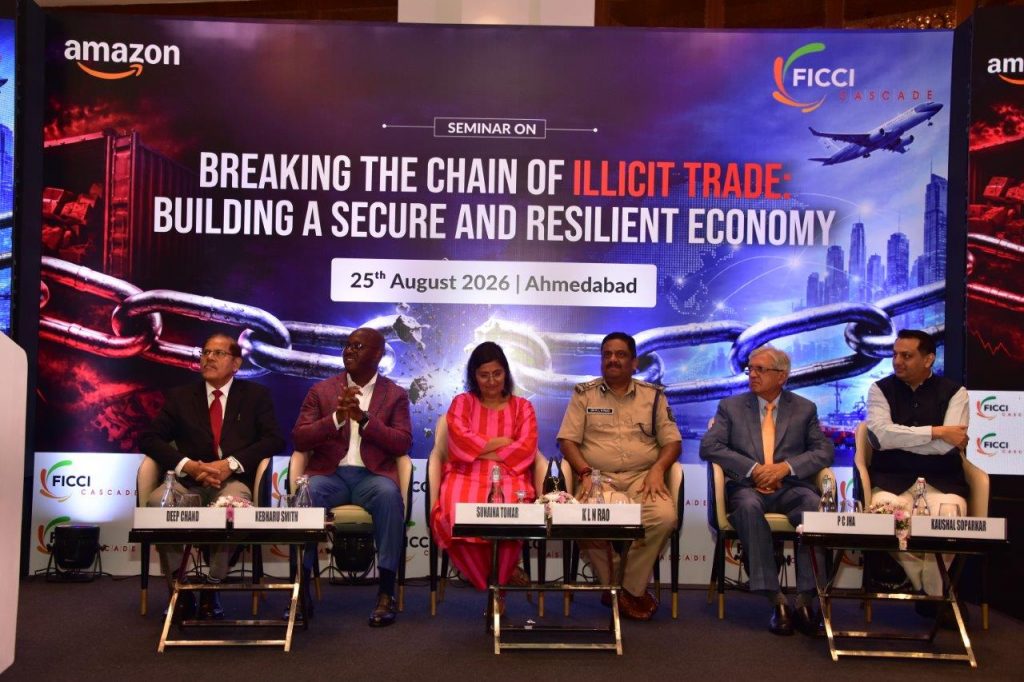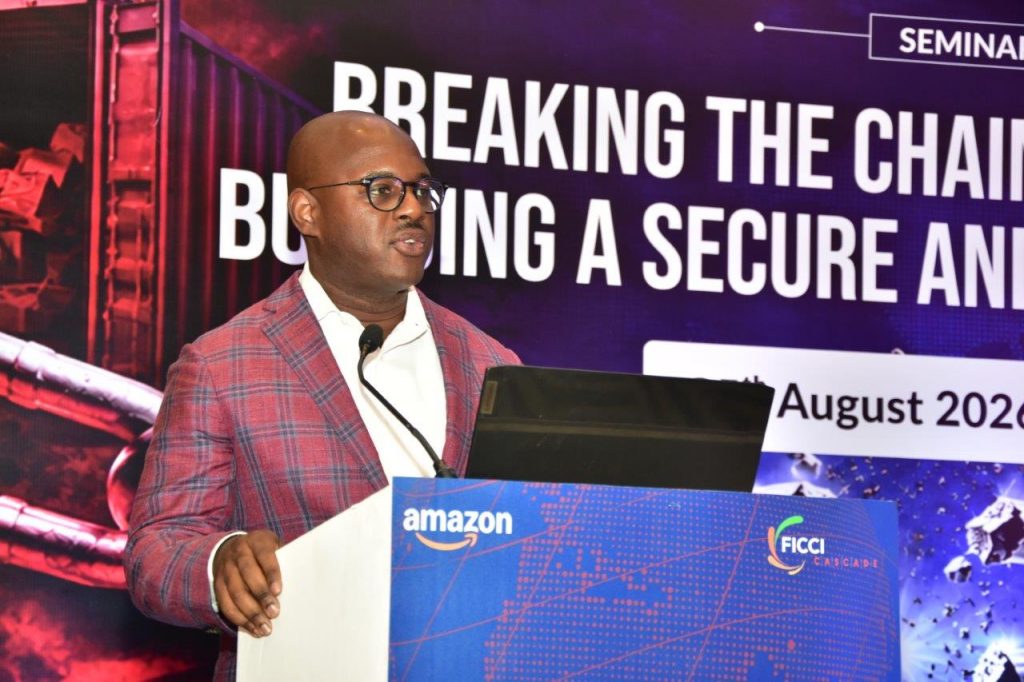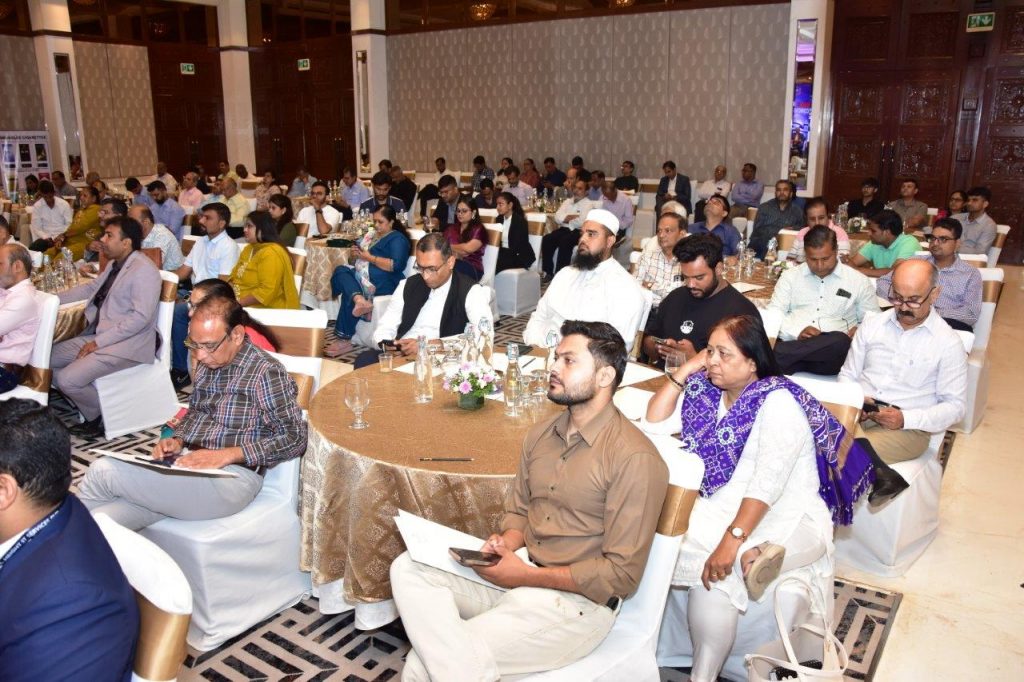



As illicit trade networks continue to evolve, counterfeiting and smuggling are emerging as increasingly complex challenges, with implications extending beyond economic losses to consumer safety, legitimate businesses and the broader economy. Addressing this menace requires a coordinated approach that brings together the strengths and expertise of government, enforcement agencies, industry and other stakeholders. Against this backdrop, FICCI CASCADE convened a seminar on “Breaking the Chain of Illicit Trade: Building a Secure and Resilient Economy” at ITC Narmada, Ahmedabad, bringing together key stakeholders to deliberate on strengthening enforcement, improving coordination and advancing collective efforts to disrupt illicit trade.
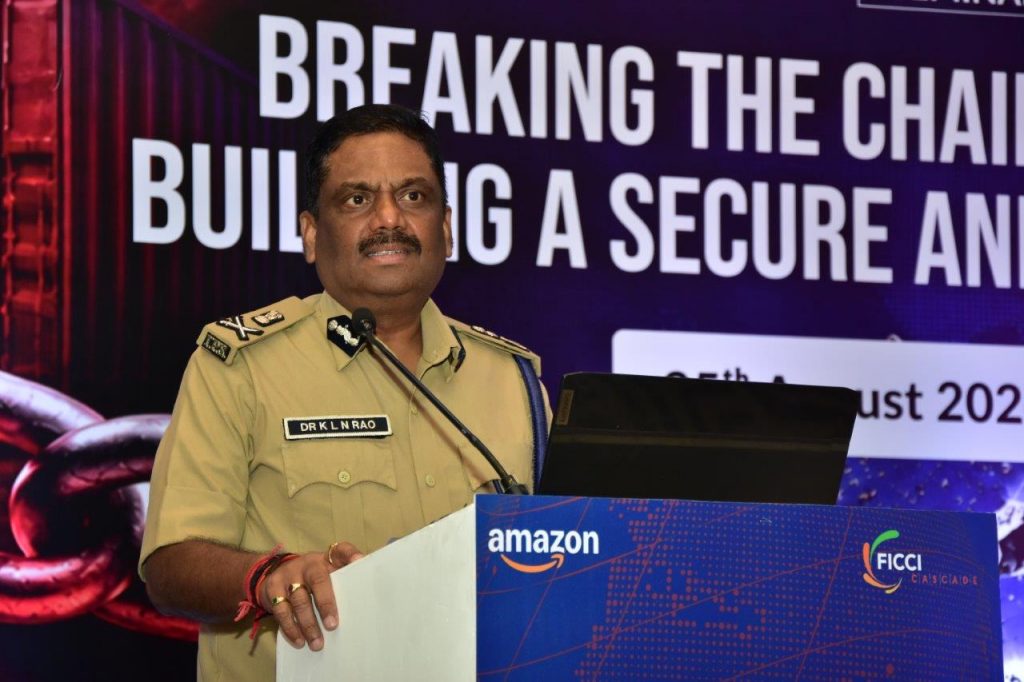
Dr. K. Laxmi Narayan Rao, DGP, CID (Crime & Railways), Gujarat Police, was the Chief Guest at the seminar. In his address, he emphasised the need for stronger collective action to address the growing challenge of counterfeiting and smuggling and highlighted the importance of coordinated efforts to effectively disrupt illicit trade networks.
Highlighting the wider economic and social implications of illicit trade, Dr. Rao noted that counterfeiting and smuggling extend beyond economic offences, with significant implications for public safety, consumer trust and the integrity of legitimate businesses. He emphasised the need for collaborative actions among enforcement agencies, government departments, industry and other stakeholders. He further stressed that strengthening intelligence-sharing, investigation and inter-agency coordination would be critical to disrupting illicit trade networks and creating a more secure and resilient economic environment.
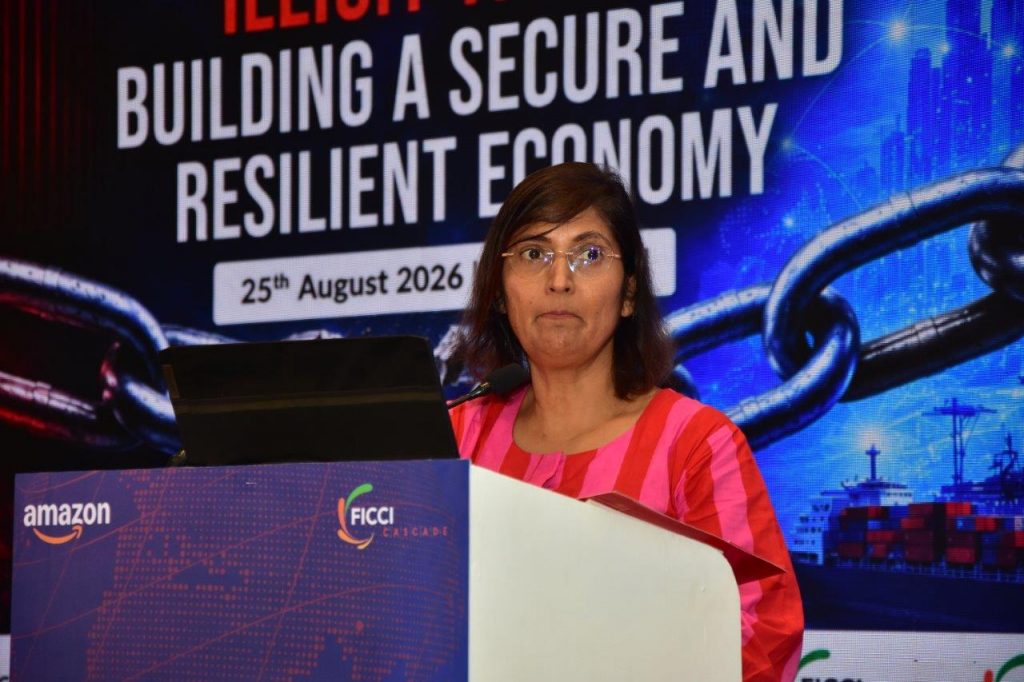
Ms. Sunaina Tomar, Former Additional Chief Secretary, Government of Gujarat and Council Member, FICCI – Gujarat State Council, highlighted the adverse impact of illicit trade on legitimate businesses and investment. She observed that illicit trade creates an uneven competitive environment for legitimate industries and can undermine investor confidence and sustainable industrial growth. She emphasised the importance of closer collaboration among government, industry and enforcement agencies to safeguard legitimate businesses and support a competitive and sustainable business environment.
Mr. Kebharu Smith, Director and Associate General Counsel, Amazon, emphasised the importance of collective action in building trust in e-commerce and combating illicit trade. He highlighted four key pillars of Amazon’s approach: proactive prevention, AI-driven intelligence supported by human expertise, decisive enforcement against bad actors, and customer empowerment through education and transparency. He also highlighted the expansion of Amazon’s Counterfeit Crimes Unit (CCU) to India, which will leverage proactive and predictive controls to pursue counterfeiters through civil litigation and criminal referrals, supporting law enforcement authorities in their efforts to combat counterfeiting.
Mr. Manish Kulhary, Commissioner of Customs, Ahmedabad, highlighted the pivotal role of Customs in preventing the entry and movement of illicit goods. He outlined Gujarat Customs’ risk-based profiling and intelligence-led enforcement approach, supported by technology and inter-agency coordination. He cited the seizure of over 80 lakh illicit cigarettes at Mundra Port during the year and approximately 10 kg of gold valued at over Rs. 100 crore in gold smuggling cases over the past three years. He also noted continued interceptions of contraband, including NDPS substances and hydroponic weed. Emphasising the need for sustained intelligence-sharing, inter-agency coordination and industry engagement, he underscored their importance in disrupting illicit supply chains and protecting legitimate trade.
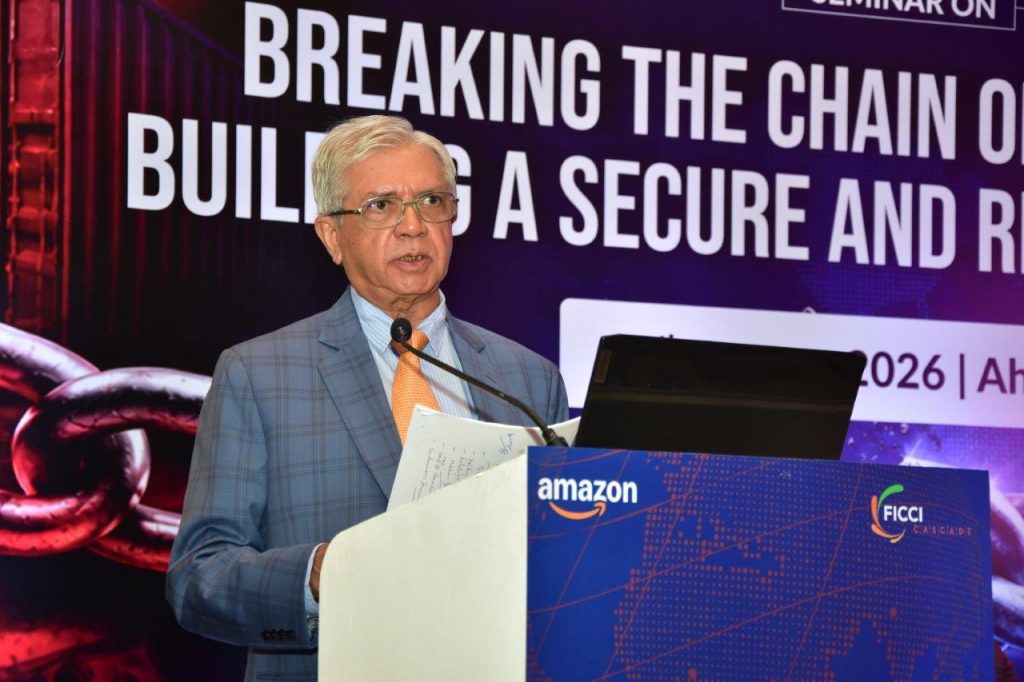
Mr. P. C. Jha, Advisor, FICCI CASCADE and Former Chairman, Central Board of Indirect Taxes and Customs (CBIC), analysed the illicit trade landscape and its economic implications. He observed that high indirect taxes and regulatory gaps can create incentives for smuggling, while price differences between legal and illegal markets distort competition, disadvantage legitimate businesses and lead to revenue losses. He also highlighted the consumer safety risks posed by spurious and illicit products, particularly in sectors where product quality is critical. He stressed the importance of balanced tax policies, robust enforcement and stronger inter-agency coordination to address illicit trade.
Mr. Deep Chand, Advisor, FICCI CASCADE and Former Special Commissioner of Police, New Delhi, talked about the broader implications of counterfeiting and smuggling, noting that these activities pose serious challenges to national security, public health and consumer trust. He stressed the importance of coordinated policy reforms, real-time intelligence-sharing and stronger public-private collaboration, alongside consumer engagement, to disrupt illicit networks. He emphasised that an approach combining prevention with effective enforcement is essential to protecting legitimate businesses and safeguarding India’s economic interests.
The seminar also brought together representatives from industry, consumer organisations and enforcement agencies, including Mr. Subodh Mankar, IPS, Superintendent of Police, Coastal Security, Gujarat Police; Ms. Anindita Mehta, CEO, Consumer Education & Research Centre; Mr. Ashish Paul, Vice President – Corporate Affairs, ITC Ltd.; Prof. (Dr.) Hareshkumar Barot, Head of Department, Financial Crime & Management, National Forensic Sciences University (NFSU), Ministry of Home Affairs, Government of India and Mr. Kaushal Soparkar, MD, Meghmani Finechem Limited & Council Member, FICCI – Gujarat State Council.
The discussions underscored the need for stronger policy interventions, effective and intelligence-led enforcement mechanisms, and sustained collaboration among government agencies, law enforcement authorities, industry and consumer organisations. The seminar highlighted that a coordinated, multi-stakeholder approach will be instrumental to disrupting illicit supply chains, protecting consumers, supporting legitimate businesses and strengthening the resilience of the Indian economy.