



Enforcement Officers joined hands with FICCI CASCADE to fight the menace of smuggling and counterfeiting, New Delhi
July 27, 2018 | Academy for Smart Policing, Chanakyapuri, New Delhi
The existence and operation of illicit markets has been an enduring problem that has escalated in scope and magnitude, impacting industries, consumers, government and economies as a whole. In fact, it is today one of the biggest challenges faced by Indian industry, impacting ‘Brand India’ globally. Intellectual property rights incentivize innovation and creativity, which strengthen the economic growth of a nation. Enforcement agencies such as the police play a pivotal role in protection of these rights. There are adequate laws available to tackle such crimes, but their adequate enforcement makes the role of enforcement officers extremely important to fight against counterfeiters and smugglers.
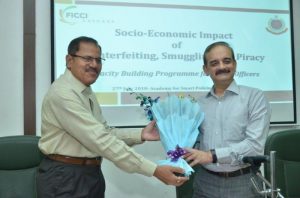
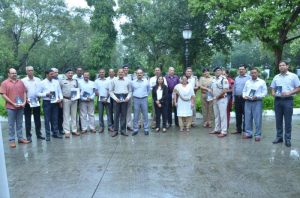
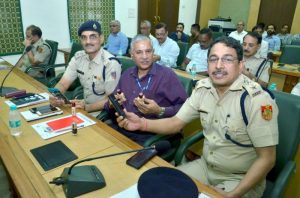
FICCI’s Committee Against Smuggling and Counterfeiting Activities Destroying the Economy [CASCADE] in its endeavor to fight the twin menace has over the years been sensitizing the country’s enforcement agencies on this issue, equipping them to understand and take requisite action against the various economic offenders. Keeping the above in view, FICCI CASCADE organised a training programme for Delhi police officials at the Academy for Smart Policing in New Delhi, on 27th July 2018. A key objective of the program was to sensitize the officials on seriousness of the socio-economic impact of counterfeited and smuggled goods, in terms of the huge revenue losses to the government and industry as well as the significant health & safety consequences faced by consumers and the society at large.
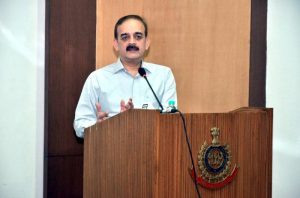
Mr. Vivek Gogia, Special Commissioner of Delhi Police-Training, who inaugurated the programme, referred to the various studies which disclosed how rampant counterfeiting and smuggling were in medicines, cigarettes and drugs, and why partnerships among stakeholders were vital in addressing the problem. He also spoke on how the menace of illicit trade was funding organized crime, elaborating further on how protection of IP rights played a key role in the growth of an economy, on the profit and survival of business and industry, generation of employment. Congratulating FICCI CASCADE on the useful initiative to sensitizing police officers on this very pertinent issue, he urged the participating officers to take advantage of the presence of the various subject-experts during their subsequent interactions, stressing that “Police must protect the image of our country as a good enforcer of laws”.
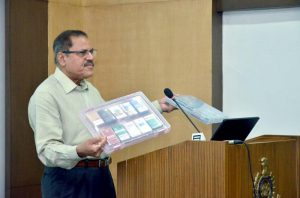
During the ensuing sessions, the police officers were apprised on the counterfeiting and smuggling trends witnessed in various products, percentages of illicit products sold in open markets and the revenue losses incurred by Government. Mr. Deep Chand, Advisor FICCI CASCADE and former Special Commissioner of Delhi Police, spoke on the alarming occurrence of counterfeit products in various markets and its impact on the socio-economic growth of the nation. He informed that FICCI CASCADE reports estimates had put the total loss to Indian government because of illicit markets in just seven manufacturing sectors at Rs. 39,239 crores, while the estimated loss to industry was Rs. 1,05,381 crores, an increase of 44.4% in only two years, adding further that this loss was just the tip of the iceberg. The grey market economy is fueling illegitimate industry and leading to increased criminalization of the society in the form of organized crime, including terrorism. Global studies have indicated that criminal syndicates all over the world have taken to counterfeiting and smuggling to fund their nefarious activities, making our society not only unsafe but also significantly adding to the enforcement costs.
The training programme provided a useful platform for the exchange of ideas and experiences in the enforcement of laws and practices while dealing with counterfeiters and smugglers. The ensuing speakers deliberated on the various aspects that a police officer needed to keep in mind while investigating cases of illicit trading, including: legal provisions relating to economic offences, penalties imposable for counterfeiting and smuggling; cases of international best practices in fighting counterfeiting and other forms of illicit trade and practical aspects of investigation of IP and related economic crimes.
The technical sessions were followed by an Interactive-Session of the police officials with industry representatives. Industry members highlighted the on-ground practical issues which they faced with regards to the availability of spurious goods and discussed collaborative actions needed with enforcement agencies to counter this menace. Prototypes of fake and smuggled goods available in the markets were also displayed and discussed with the officers.
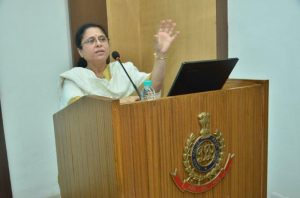
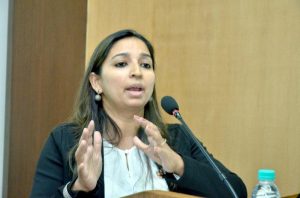
Among the speakers who discussed the wide-ranging concerns on this issue with the participating police officials were: Dr. Alka Chawla, Associate Professor, Faculty of Law, University of Delhi and Advisor, FICCI Intellectual Property Education Centre; Ms. Shilpi Jha, Senior Legal Counsel for Intellectual Property – South Asia, Embassy of the United States of America; Mr. Vikrant Rana, Managing Partner, S.S Rana & CO, Ms. Swati Mujumdar, Regional Legal Manager – North, Hindustan Unilever Ltd.; Ms. Lohita Sujith, Director, Corporate Communications, Motion Pictures Association, India and Mr. Sanjay Kaushik, Managing Director, Netrika Consulting and Investigations Ltd.
The workshop proved helpful not only in updating the police officers on the relevant laws and procedures to be followed while dealing with the cases related to smuggling and counterfeiting, but also in sensitizing them on the need to extend increased priority in tackling the illicit trade menace in view of its significant adverse socio-economic impact on the country. During 2018-19, FICCI-CASCADE proposes to hold more such workshops across the country in briefing enforcement agencies on procedural and enforcement issues while tackling illicit trading activities.



NAFDAC destroys counterfeit products worth N650m in Kaduna
As part of its efforts towards eradicating fake drugs in the society, the National Agency for Food and Drugs Administration and Control, (NAFDAC) has destroyed goods worth N650 million at its Buruku dumpsite in Kaduna.
Speaking to newsmen shortly after the exercise in Kaduna Thursday, the Director General of NAFDAC, Prof. Christian Mojisola Adeyeye, said the exercise was to get rid of spurious NAFDAC regulated products from circulation in Nigeria.
According to Prof Adeyeye, “The products being destroyed today are made of substandard and falsely labelled medicines, unwholesome foods products, cosmetics and other counterfeited products. “Drug counterfeiting is an act of economic sabotage and also terrorism against public health.”
While commending the Federal Government over the ban on the use codeine syrup, the D.G. who was represented by the Acting Director, North-West Zone, Pharm. Gimba Dauda said, “the decision is to ensuring the reduction in the abuse of the substance.
http://dailypost.ng/2018/07/26/nafdac-destroys-counterfeit-products-worth-n650m-kaduna/
Lear More2 interstate tobacco smugglers held with 150kg contraband
Coimbatore: The food safety department detained two men, who were smuggling 150kg of banned tobacco products from Bengaluru, at Walayar checkpost on Wednesday.
The catch assumes significance as the department had been catching stashes of banned chewable tobacco products from godowns across the district, but it is yet to zero in on how these banned products manufactured outside the state come into the City
On Wednesday, officials at Walayar checkpost stopped a Kerala-registered Maruti Ertiga and found packets of banned tobacco products. They detained Vibin, 30, and Riyaz, 33, both from Ernakulam. Subsequently, the checkpost officials informed the rural police and the food safety department.
Lear More
Ficci Cascade constitutes Think Tank
New Delhi: FICCI’s dedicated vertical, Committee Against Smuggling and Counterfeiting Activities Destroying the Economy [CASCADE] has constituted a think tank which will advise, direct and provide necessary inputs in formulating a strong & effective future course of action to eliminate the menace of illicit trade. With the ever changing scenario of technology, trade policies and development of the law on the subject, the constitution of a Think Tank to guide and suggest inputs in mitigating this challenges arising out of illicit trade practices is opportune.
The Think tank comprises Ajay Shankar, Former Secretary, Department of Industrial Policy and Promotion (DIPP),Govt of India; Anil Sinha, Former Director, Central Bureau of Investigation; Hem Kumar Pande , Former Secretary, Ministry of Consumer Affairs, Food and Public Distribution; Kameswari Subramanian, International Expert, Customs Law, Procedures & Trade Facilitation; Justice Manmohan Sarin, Former Lokayukta, NCT of Delhi, Chief Justice, High Court of Jammu & Kashmir, Judge, High Court of Delhi; Najib Shah, Former Chairman, Central Board of Indirect Taxes and Customs; Narendra K Sabharwal, Chairman, FICCI IP Committee & Former Deputy Director General, WIPO; Neeraj Kumar, Former Commissioner, Delhi Police; P K Malhotra. Former Secretary Law, Ministry of Law and Justice; Sanjeev Tripathi, Former Chief, Research and Analysis Wing (RAW); Vikram Srivastava, Former Director General, Central Reserve Police Force and Anil Rajput, Chairman, FICCI CASCADE.
http://www.millenniumpost.in/business/ficci-cascade-constitutes-think-tank-311237
Lear MoreFicci Cascade Forms 12-Member Think Tank To Fight Illicit Trade
Industry chamber Ficci’s anti-smuggling and anti-counterfeiting arm, Ficci CASCADE today said it has roped in ex-DIPP secretary Ajay Shankar and former CBI director Anil Sinha, among others, to form a think tank as part of efforts to curb illicit trade practices.
Ficci CASCADE (Committee Against Smuggling and Counterfeiting Activities Destroying the Economy) said in a statement that it has constituted a think tank which will advise and provide necessary inputs in formulating a strong and effective future course of action to eliminate the menace of illicit trade.
The other members of the think tank include Hem Kumar Pande, former secretary in ministry of consumer affairs, food and public distribution; Justice Manmohan Sarin, former Lokayukta, NCT of Delhi and Najib Shah, ex-chairman, Central Board of Indirect Taxes and Customs.
Ex-Delhi Police Commissioner Neeraj Kumar; former Research and Analysis Wing chief Sanjeev Tripathi; ex-Director General, CRPF Vikram Srivastava, international expert Kameswari Subramanian and Anil Rajput, Chairman, Ficci CASCADE are also members of the think tank, the statement added.
Lear MoreFICCI CASCADE Think Tank Meeting, New Delhi
July 24, 2018 | ITC Maurya, New Delhi
Illicit trade holistically disrupts the sustainable development of a nation. It not only leads to loss of revenues to states, but also risks legitimate businesses. Besides, illicit trade causes significant threats to the health, safety and security of the citizens, as well as adds to costs on governance, environment and biodiversity. Problem of illicit trade is serious which needs to be dealt with sincere commitment leading to result- oriented effective steps addressing the challenge of counterfeiting and smuggling. In pursuance of the agenda, FICCI CASCADE has constituted a think tank which will advise, direct and provide necessary inputs in formulating a strong & effective course of action to eliminate the menace of illicit trade. The first meeting of the think tank is scheduled on 24th July 2018 at ITC Maurya, New Delhi to discuss factors which will help in mitigating the challenges arising out of illegal trade practices with regards to counterfeiting, smuggling and piracy.



Malaysian woman caught for smuggling over 200 cartons of contraband cigarettes via Tuas Checkpoint
SINGAPORE – The authorities seized a total of 227 cartons and 1,366 packets of contraband cigarettes on Monday afternoon (July 16) at Tuas Checkpoint.
In a Facebook post on Wednesday morning, the Immigration and Checkpoints Authority (ICA) said that officers had found the duty-unpaid cigarettes stashed away in various compartments of a Malaysia-registered car at about 1.25pm.
From the pictures ICA posted, the cigarettes were concealed in places such as the inside of the car’s modified dashboard, front bumper, and rear fender.
The car was driven by a 42-year-old Malaysian woman. The case has been handed over to Singapore Customs.
Just last Friday, the ICA had seized around $19,200 worth of duty-unpaid cigarettes that had been concealed using similar methods, also involving a Malaysian driver and a Malaysia-registered car.
Lear More
Customs seizes over 30,000 counterfeit toys arriving at port in Charleston
Over $120,000 of counterfeit toys were taken by U.S. Customs and Border Patrol agents as they arrived at Charleston port, WTOC reports.
Trademarks belonging to Saban Brands, which holds the rights to Power Rangers, and Danjaq, which owns the copyright on “James Bond 007” were found as part of the shipment, as were trademarks for Apple Inc. and Cartoon Network, according to WTOC.
The shipment’s origin was China, and WTOC reports that it arrived in late June headed for an importer in North Carolina, according to Rob Brisley, spokesman for the Department of Homeland Security.
WTOC reported that in addition to the financial impact to rights holders, counterfeit products pose safety concerns because their manufacturers have no reason to adhere to safety guidelines when it comes to production or materials according to Robert Fencel, director of the U.S. Customs and Border Protection Agency’s Charleston Area Port.
http://www.islandpacket.com/news/state/south-carolina/article164363777.html
Lear MoreNeither an Authentic Product nor a Counterfeit: The Growing Popularity of Shanzhai Products in Global Markets.
Counterfeits have been a longstanding concern to global brand manufactures. However, recently, a new product category that partly imitates and partly innovates under the term shanzhai has entered into market. Shanzhai products mimic original leading brands through visual or functional similarities and may also provide additional features. Given this new copycat phenomenon, our study for the first time conceptually distinguishes shanzhai products from counterfeits, theoretically compares the values of consumers choosing shanzhai products versus counterfeits, and empirically tests such differences in one integrative model. Specifically, shanzhai buyers value product functional benefits more than counterfeit buyers, while counterfeit buyers value status consumption, yet experience less self‐clarity than shanzhai buyers. Our findings offer important implications for imitative innovation literature as well as for practitioners.
https://onlinelibrary.wiley.com/doi/abs/10.1002/cjas.1501
Lear More
INDIA’S COASTLINE PROTECTION FLEET – AN OVERVIEW
India is a predominantly maritime nation, with a coastline of 7,517 km. This influences all the spheres of Indian lifestyle, from trade to tourism. India’s peninsular orientation dominates trade connectivity with the rest of the world. Consequently, it is seen that safe sea trade is a direct influencer of the economic prosperity of the country. Even today, 90% of India’s trade, by volume, is made via sea routes, making security and safety imperative.
Tourism has developed in the coastal regions of India, necessitating better safety equipment and technological efficiency in boats and ships. Additionally, the vast biodiversity of our marine ecosystem needs constant protection and conservation. The rising threat of piracy and terrorism makes border control a very serious matter.
Given the influence of the seas on the economic and social stability of India, a strong defence force for the protection of the coast and marine territories is important. As we have seen previously, the responsibility of protecting our coastline is broadly divided between three principal forces, viz., the Indian Navy, the Indian Coast Guard, and the Border Security Force.
In this article, we see what the functions are, in maritime protection, and the vessels used by these forces that help them work efficiently.
Avenues of Marine Protection
Maritime Security
Protection of India’s territorial integrity, residents, and offshore assets from external, seaborne threats is the principal avenue of marine protection, handled by the Indian Navy. Furthermore, it is the responsibility of the Navy to deter conflict and coercion in these waters.
Coastal and Offshore Defence
Coastal and offshore defence is a part of maritime security and is primarily focused along the coastline, baseline, internal waters, and to an extent in the territorial waters. Though the overall management of the coastal and offshore defence operations falls under the purveyance of the Indian Navy, services are provided by other state and central forces such as the Indian Coast Guard, Border Security Force, State Police, Other Armed Forces, Central Industrial Security Force, Intelligence Agencies, Customs and Immigration Authorities, Port Trust Authority, and Shipping and Energy Operators.
https://www.shmgroup.com/blog/indias-coastline-protection-fleet-an-overview/
Lear More